



“Should I quit my job?”
It’s the question burning in your mind at 3 AM when you can’t sleep because you’re dreading Monday morning.
You’ve realized you’re burned out. You’ve read the articles. You know something needs to change.
But here’s your reality: You have a mortgage. Kids in school. Health insurance tied to this job. Student loans. A family depends on your income. Bills that don’t pause while you “find yourself.”
So the real question isn’t “Should I recover from burnout?” It’s: “Can I recover from burnout without quitting my job?”
The honest answer: Maybe. It depends on three critical factors.
What you’ll learn:
- The 3-factor test: Is recovery at your current job possible?
- When staying is viable vs. when you need to leave
- Practical strategies for recovering while working
- What changes are non-negotiable if you stay
- How to know if you’re making progress or just surviving
- Real talk about the middle ground options
What this isn’t:
- A blanket “yes, you can do it!” (I believe that would be dishonest)
- A blanket “you must quit” (that would be impractical)
- Generic self-care advice that doesn’t address the real constraints
This is the nuanced, practical truth about recovery while working, based on what I learned while recovering from burnout while working. This is the answer no one wants to give because it’s not simple, but you need to hear it.
Table of Contents:
- The Honest Answer: It Depends
- The 3-Factor Assessment
- If Recovery While Working IS Viable
- When It’s NOT Working
- The Middle Ground Options
- Real Talk: The Privilege Factor
- Your Next Steps
Recovering From Burnout While Working –The Honest Answer: It Depends
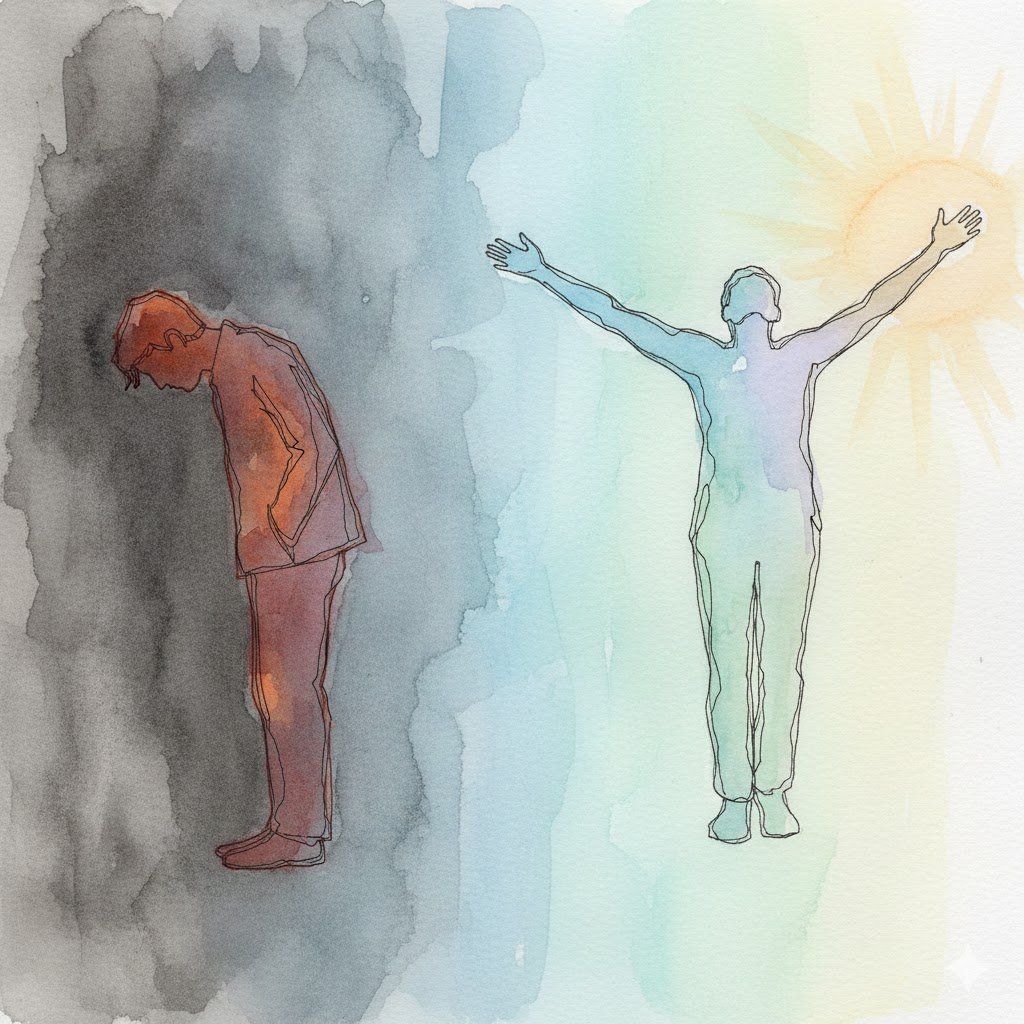
The Uncomfortable Truth:
Recovery while working is possible in some situations, while it is Impossible in others. Looking back, knowing the difference matters the most.
When people want a simple answer:
- “Yes, you can definitely recover while working!” (Self-help optimism)
- “No, you must quit to truly heal!” (Privilege speaking)
The actual answer:
It depends on:
- How severe your burnout is
- How toxic your workplace is
- How much control you have to make changes
Get one of these wrong, and recovering while working becomes difficult and sometimes impossible.
Why This Matters:
Trying to recover in a fundamentally toxic situation = years of suffering while thinking you’re “working on it”
Quitting a salvageable job prematurely = unnecessary financial and career disruption
What I found difficult is being aware of this difference or having the mental capacity to discern this. This is even more challenging when you are barely staying afloat.
The goal: I want to provide you with an honest assessment so you make the right call for YOUR situation.
My Own Journey:
I’ve been on both sides of this equation.
Once, I left early. I saw warning signs of a fundamentally unsustainable environment, a workplace that valued certain types of work while treating operations management as “fluff” or just taken for granted. That kind of structural disrespect doesn’t change. Leaving saved me from mental torture.
Another time, I stayed. The situation was more complex. I had support from senior leadership to change systemic failures. I believed I could help the people and fix the business. I told myself I was staying for them, but looking back, part of it was ego. I didn’t want to lose, even at the cost of my own health. There is a cost for saying yes.
I suffered along the way. The damage to the system was beyond my ability to cure it. But I also learned what changes I could control, negotiated boundaries that helped, and ultimately, when the entire department shut down due to economic conditions, I felt relief more than devastation.
The lesson: Sometimes the wisdom is knowing which situation you’re in.
Important note: This article focuses on work-induced burnout. If your burnout stems primarily from non-work situations (caregiving, toxic relationship, chronic illness), different factors apply.
The 3-Factor Assessment
I’d like to help you assess YOUR situation honestly to see if recovering from burnout while working is even possible.
Factor #1: Burnout Severity
The principle: The more severe your burnout, the more changes needed, the harder recovery while working becomes.
Early Stage Burnout (3-5 warning signs)
Characteristics:
- Still functioning, but struggling
- Exhausted, some physical symptoms
- Can think relatively clearly
- Haven’t had health crisis
Can you recover while working? Yes, likely with significant boundary changes.
What it requires:
- Firm boundaries on time and availability
- Lowered standards on non-essential work
- Consistent sleep and basic self-care
- Strategic use of breaks and recovery time
- Possibly reduced hours or modified role
Timeline: Weeks to few months with consistent changes
Example scenario: “You’re exhausted, dreading work, sleep is suffering. But you can still do your job, make decisions, function. You need boundaries and rest, not a complete overhaul.”
Moderate Burnout (6-9 warning signs)
Characteristics:
- Functioning but barely
- Significant physical and emotional symptoms
- Cognitive struggles (brain fog, decision paralysis)
- Quality of life seriously impacted
Can you recover while working? Maybe – depends heavily on factors 2 and 3
What it requires:
- Everything from early stage PLUS
- Significant role modifications or reduced hours
- Possibly short-term leave (even 2-4 weeks helps)
- Major restructuring of responsibilities
- Strong support system
- Job that allows these modifications
Timeline: Months, with serious commitment to changes
Example scenario: “You’re barely making it through days. Weekends provide minimal relief. You need major changes to workload, role, or schedule – not just boundaries.”
Severe Burnout (10+ warning signs, or health crisis)
Characteristics:
- Barely functioning or not functioning
- Health symptoms significant (ER visit, breakdown)
- Can’t think clearly or make decisions
- Complete depletion
Can you recover while working? Extremely difficult, often no
What it requires:
- Extended leave (weeks to months) almost always necessary
- Dramatic role change or part-time if returning
- Possibly medical intervention
- Complete restructuring of life, not just work
Reality check: At this severity, working full-time while recovering is like trying to heal a broken leg while running marathons.
Timeline: Months to year+, usually requires time completely away.
Example scenario: “You had health scare, can’t get out of bed, or are having breakdowns. You’re past the point where minor adjustments help.”
My experience: I was at this level. The near-stroke was my body staging an intervention. I needed time away (I negotiated a few days off at first, then slowly returned), and significant role changes. But trying to work full-time at that severity? Nearly impossible.
Self-Assessment:
Based on the 13 warning signs article, how many signs do you have?
- 3-5: Early (recovery while working likely viable)
- 6-9: Moderate (recovery while working depends on other factors)
- 10+: Severe (recovery while working very difficult)
Factor #2: Workplace Toxicity
The principle: Some environments are fundamentally incompatible with recovery, no matter how good your boundaries are.
Salvageable Workplace:
Characteristics:
- Reasonable workload is possible (even if currently unreasonable)
- Leadership is receptive to boundary conversations
- Some autonomy over how you work
- Culture isn’t actively hostile to wellbeing
- Resources exist to do your job adequately
- Psychological safety exists (you can speak up without retaliation)
Can you recover here? Yes, with boundaries and changes
What it looks like: “Your workplace isn’t perfect, but reasonable people can have reasonable conversations about workload, boundaries, and modifications.”
Toxic Workplace (Red Flags):
Warning signs:
- Systematically unreasonable demands that can’t be met
- Leadership hostile to any boundary setting
- Culture glorifies overwork and burnout
- No autonomy, micromanaged constantly
- Inadequate resources + blame for not meeting impossible standards
- Speaking up = retaliation or dismissal
- Your reasonable boundaries are seen as “not being a team player”
Can you recover here? No, not really
What it looks like: “Every attempt to set boundaries is met with resistance. The workload is structurally impossible. The culture actively punishes healthy behavior.”
The hard truth: You can’t personally develop your way out of a systematically toxic system.
My Experience with Workplace Toxicity:
The toxicity in my situation was covert initially. I never realized it was that bad in the beginning. You generally assume challenges in any workplace. You have some good and bad people, right?
The severity increased over time and toxicity became more overt. People started getting bolder about making bad comments or judging other people’s work.
But here’s the complexity: Some senior leadership acknowledged the mediocrity and the voice given to incompetent or toxic people. They supported initiatives to change. This is what led me to stay. I thought I could fix it.
When I finally realized it was hopeless: Despite making the changes we hoped for and achieving all the goals despite the challenges, the work was never acknowledged. That’s when I knew that this system was beyond repair.
The lesson: Covert toxicity that becomes overt, combined with leadership support that doesn’t translate to actual change, that’s the most dangerous combination. You stay longer than you should because there’s just enough hope.
Self-Assessment Questions:
Answer honestly:
1. Can you have honest conversations about workload?
- Yes = salvageable
- No = toxic flag
2. When you’ve set boundaries in past, what happened?
- Respected or negotiated = salvageable
- Dismissed or punished = toxic flag
3. Is your role set up for success? (Clear goals, adequate resources, reasonable timelines, support)
- Mostly yes = salvageable
- Mostly no = toxic flag
4. If you took initiative to improve a process, what would happen?
- Supported or considered = salvageable
- Blocked or ignored = toxic flag
5. Do you feel psychological safety? (Can speak up without fear)
- Yes = salvageable
- No = toxic flag
Scoring:
- 4-5 salvageable = Recovery while working is feasible
- 3-4 toxic flags = Recovery while working very difficult
- 5 toxic flags = This workplace is fundamentally incompatible with recovery
Factor #3: Your Level of Control
The principle: Recovery requires making changes. The more control you have, the more changes you can make.
High Control:
What this looks like:
- Can set your own schedule (at least partially)
- Can work remotely some or all the time
- Can say no to additional projects
- Can delegate or reduce responsibilities
- Have some influence over your workload
- Can take breaks and vacation when needed
- Can modify how you do your work
Can you recover here? Yes, you have leverage to make necessary changes
Moderate Control:
What this looks like:
- Fixed schedule but can protect boundaries within it
- Some flexibility on how work gets done
- Can negotiate some modifications
- Can push back occasionally (even if uncomfortable)
- Have some say in priorities
Can you recover here? Possibly, if you use what control you have strategically
Low Control:
What this looks like:
- No flexibility on schedule, location, how work is done
- Can’t say no without consequences
- Can’t delegate or reduce anything
- Workload dictated entirely by others
- Boundaries = “not committed enough”
Can you recover here? Very difficult, likely impossible
Reality: If you have almost no control over your work circumstances, you’re trying to recover with hands tied behind your back.
What I Negotiated (My Control Points):
Even in a deteriorating situation, I had some control and used it:
1. Late start for work – So I could maintain my morning routine of meditation, journaling, and exercise. This was non-negotiable for me.
2. Work from home 1-2 days per week – Reduced commute stress and gave me more control over my environment.
3. Few days off early on – To rest and slowly return to work rather than jumping back at full capacity.
These changes didn’t fix the toxic system, but they gave me enough buffer to survive while I figured out my next move.
The lesson: Even in bad situations, find what control you DO have and use it strategically.
Self-Assessment:
What control do you actually have?
- Schedule flexibility: (None / Some / Significant)
- Workload influence: (None / Some / Significant)
- Ability to say no: (Never / Sometimes / Often)
- How work gets done: (No flexibility / Some / Lots)
3+ “None/Never” answers = Very limited control, recovery extremely difficult
THE 3-FACTOR VERDICT:
Combine your assessments:
Recovery While Working IS Viable:
- Early-moderate burnout (3-9 signs)
- Salvageable workplace (4-5 salvageable indicators)
- Moderate-high control (some flexibility)
Recovery While Working MAYBE Viable (Requires Perfect Execution):
- Moderate burnout (6-9 signs)
- Mixed workplace (2-3 salvageable, 2-3 toxic)
- Moderate control
Recovery While Working NOT Viable:
- Severe burnout (10+ signs)
- Toxic workplace (4-5 toxic flags)
- Low control (minimal flexibility)
If Recovery While Working IS Viable: The Non-Negotiables
You’ve assessed: Recovery while staying is possible. Here’s what MUST happen:
Non-Negotiable #1: Real Boundaries, Really Held
Not aspirational boundaries. Not “I’ll try to” boundaries. Lines you actually hold.
Minimum boundaries for recovery while working:
- Fixed work hours with ZERO work outside them
- Email and Slack completely off outside hours (delete apps if needed)
- Actual lunch break away from desk
- All vacation days used (not “too busy”)
- Saying no to additional projects until workload is manageable
The test: Would someone observing your behavior know you’ve set this boundary?
If your boundary is invisible to observers, it doesn’t exist.
My experience: The late start was visible. My team knew I started later because of my morning routine. Email silence after hours was visible. When people emailed me at 8 PM, they consistently received responses at 9 AM the next day. That’s a real boundary.
Non-Negotiable #2: Lowered Standards (Permanently)
The standards that got you burned out can’t be the standards of recovery.
What this means:
- “Good enough” is the new excellent
- 80% quality on most things, not 100%
- Letting some things be mediocre or even fail
- Accepting you can’t do everything you used to
This isn’t temporary: If you return to old standards, you’ll return to burnout.
The mindset shift: Sustainable 80% beats unsustainable 100% every time.
Non-Negotiable #3: Protected Recovery Time
Working while recovering means you have LESS time for recovery than if you quit. Therefore, the time you have must be sacred.
What this looks like:
- Morning routine protected (start work later if needed)
- Evening wind-down protected (end work firmly)
- One full day per week completely off
- Regular sleep prioritized over everything
- Recovery activities scheduled like important meetings
The trap: “I’ll recover on weekends or after this project or when things calm down”
Things won’t calm down. You must create recovery time, not wait for it.
My morning routine: Meditation, journaling, exercise. Non-negotiable. Worth negotiating late start with leadership. This was my foundation.
Non-Negotiable #4: Role Modification or Reduced Hours
Full-time, full-intensity while recovering = extremely difficult.
Options to explore:
- Reduced hours (even 10% helps)
- Modified responsibilities (shift away from most draining tasks)
- Different role or team within company
- Remote work (if commute is draining)
- Part-time temporarily during acute recovery
The conversation: “I’m addressing a health issue and need to modify my role for [timeframe]. Here’s what I’m proposing…”
Yes, this is scary. But continuing as-is is scarier.
Non-Negotiable #5: Progress Markers You Actually Track
How do you know if recovery while working is actually working?
DON’T rely on:
- “I think I feel better”
- Wishful thinking
- Hoping it’s working
DO track:
- Sleep quality (hours, how rested you feel)
- Physical symptoms (frequency, severity)
- Emotional state (numbness, overwhelm, disproportionate reactions)
- Cognitive function (decision-making, focus, memory)
- Whether warning signs are decreasing
The rule: If you’re not seeing measurable improvement in 4-8 weeks of serious changes, recovery while staying isn’t working.
Non-Negotiable #6: Backup Plan
Hope this works, but plan for it not working.
What this means:
- Financial runway if possible (even small emergency fund)
- Resume updated
- Network aware you might be looking
- Clear criteria for “this isn’t working, time to leave”
Why: If recovery while working fails, you need to be able to leave without complete desperation. Desperation makes bad decisions.
My approach: I knew the department would likely shut down eventually. The logical best option was to wait it out if no other good opportunity came along. I didn’t want to go from one hell into another. I needed a stable place that focused on customers and where ownership was involved in the business and understood it.
While I stayed, I looked for opportunities, but with clear criteria, not desperation.
When Recovery While Working Isn’t Working
How to Know It’s Time to Leave:
You’ve implemented boundaries, lowered standards, protected recovery time, possibly modified your role…
And after 2-3 months:
- Warning signs aren’t decreasing (or are increasing)
- Physical and emotional symptoms aren’t improving
- You’re just surviving, not recovering
- Every week feels like hanging on until weekend
- The thought of continuing makes you want to cry
This isn’t failure. This is data.
The data is telling you: This situation is incompatible with recovery.
What to Do:
1. Accept the reality: Some situations can’t be fixed with personal changes
2. Start your exit plan:
- Update resume
- Activate network
- Clarify what you need in next role
- Save money if possible
- Set timeline (even if it’s “within 6 months”)
3. Don’t wait for catastrophic collapse: Leave while you still have capacity to job search
4. Take whatever leave you can: Even if it means leaving sooner
5. Prioritize your health over your resume: Gap better than health crisis
The Permission You Need:
Leaving a job that’s destroying you isn’t failure. It’s self-preservation.
Your career will recover. Your health might not.
My relief when the decision was made for me: When the department shut down, despite the uncertainty, I felt more relief than fear. That told me everything I needed to know about whether I should have stayed. Eventually, I found a place that aligns with me.
The Middle Ground Options
Not quite “stay and recover” or “quit immediately.” What else exists?
Option 1: Short-Term Leave
What it is:
- Medical leave (2-4 weeks can create significant reset)
- Sabbatical if available
- Unpaid leave if financially possible
- Use all vacation and PTO immediately
When this helps: Gives breathing room to stabilize, then return with boundaries
My experience: I negotiated a few days off early on to rest and slowly return. Even that small buffer helped.
Option 2: Internal Transfer
What it is:
- Different team (away from toxic manager)
- Different role (away from burnout-causing aspects)
- Different department entirely
When this helps: When specific team or role is problem, not whole company
Warning: Make sure you’re not just moving to a different part of the same toxic culture.
Option 3: Reduced Hours Temporarily
What it is:
- Drop to 80% or part-time for 3-6 months
- Financial hit but not total loss of income
- Dedicated recovery time
When this helps: When workload is issue but role and company are salvageable
Warning: Some companies use this as stepping stone to pushing you out. Know your rights.
Option 4: Soft Exit (Build Runway While Still Employed)
What it is:
- Stay while preparing to leave
- Save money, update resume, network, apply
- Leave when you have better option, not in desperation
When this helps: When you know you need to leave but can’t immediately
Warning: Don’t stay in “soft exit” mode for years. Set timeframe (6 months max).
My approach: This is essentially what I did. I knew the system was beyond repair, looked for opportunities while staying, and was prepared.
Option 5: Lateral Move to Less Demanding Role
What it is:
- Deliberately “step back” in responsibility
- Take pay cut for sustainability
- Prioritize recovery over career advancement
When this helps: When ambition contributed to burnout, and you’re willing to trade prestige for health
Warning: This requires checking your ego. Can you make peace with “stepping back”?
Real Talk: The Privilege Factor
The Elephant in the Room:
Some advice about burnout recovery assumes financial flexibility most people don’t have.
“Just quit!” assumes you have savings, can afford health insurance, have a partner’s income, or can move in with family.
Reality for many:
- Living paycheck to paycheck
- Sole income for family
- Expensive health conditions requiring insurance
- Dependents relying on you
- No safety net
What This Means:
Recovery while working might not be ideal. But it might be only option.
If that’s you:
- You’re not wrong for staying
- Do the absolute minimum at work to keep job
- Use every ounce of control you have for boundaries
- Protect recovery time ruthlessly
- Parallel-track: recover while building exit plan
- Give yourself grace for imperfect recovery
The goal: Survive sustainably while creating options, even if slowly.
My Advice from Experience:
The first signs you see in your workplace, start your little experiments to see what is in your control and what is not.
Having savings to survive without a job for a long time gives you an advantage. It allows you to think rationally rather than in desperation.
Do what you think is needed to be done to make sure you have done your part for that job to the best of your ability.
But if it affects physical or mental wellbeing, start your plan to exit on your own terms.
Don’t wait until you have no choice. Build your runway now.
Your Next Steps: The Assessment Tool
Take the “Can I Recover While Working?” Quiz
Score yourself on each factor (1-10):
Burnout Severity (higher = more severe):
- How many of 13 warning signs? (3 signs=3, 13 signs=13)
- Score: ___ / 13
Workplace Toxicity (higher = more toxic):
- How many toxic flags from assessment? (0 flags=1, 5 flags=10)
- Score: ___ / 10
Your Control (higher = more control):
- How much flexibility and autonomy do you actually have? (none=1, lots=10)
- Score: ___ / 10
Calculate:
Total Burnout + Toxicity score: ___ + ___ = ___ (lower is better) Minus Control score: ___ – ___ = ___
Your Recovery While Working Feasibility Score:
0-10: Very feasible – implement boundaries and strategies now 11-15: Possible but challenging – needs perfect execution 16-20: Very difficult – consider middle ground options 21+: Likely not viable – start exit planning
Based on Your Assessment:
If Recovery While Working IS Feasible (score 0-10):
Immediate actions:
- Set ONE boundary this week
- Download Burnout Recovery Starter Kit for practical strategies
- Read What Actually Works in Burnout Recovery for full implementation
- Track progress weekly using markers in this article
- Give it 8-12 weeks of serious implementation
Resources:
- How to Set Boundaries at Work When Already Burned Out
- The Minimum Care Routine (
- Recovery Stages to understand what comes next
If Recovery While Working MAYBE Feasible (score 11-15):
Critical steps:
- Implement ALL six non-negotiables immediately
- Explore middle ground options (leave, transfer, reduced hours)
- Set 90-day checkpoint: If not significantly better, time to leave
- Build exit runway parallel to recovery attempts
- Get support (therapist, coach, trusted advisor)
Resources:
- Read What Actually Works for deep strategies
- Consider Is It Time for a Radical Change? (coming soon) to evaluate options
If Recovery While Working NOT Viable (score 16+):
Reality check actions:
- Accept this situation won’t support recovery
- Read Is It Time for a Radical Change? (Coming soon) now
- Start exit planning (even if takes months)
- Take any leave available immediately
- Prioritize survival + exit plan over recovery while staying
The hard truth: Sometimes the healthiest thing you can do is leave.
The Question You’re Really Asking
“Recovering from burnout while working… is it really possible?” really means: “Do I have to blow up my life to get better?”
The Honest Answer:
Sometimes yes. Sometimes no. It depends on factors you can assess.
What I wish someone had told me:
The question isn’t just “Can I stay?” It’s “Should I stay?”
Some situations are recoverable with boundaries and changes. Others are fundamentally toxic and no amount of personal development fixes that.
The wisdom is knowing the difference.
If You Can Recover While Working:
- It requires real changes, not just trying harder
- It takes months, not weeks
- It demands boundaries you’ve never held before
- But it’s possible
If You Can’t:
- That’s not your failure
- That’s the system showing you it’s incompatible with human wellbeing
- Leaving is wisdom, not weakness
The only wrong choice: Staying in a situation that’s destroying you while telling yourself you’re “working on it.”
Your health isn’t negotiable. Your job is.
Make your decision from that truth.
Your Next Step
Download: Burnout Recovery While Working Toolkit (coming soon)
Get specific strategies for:
- Implementing boundaries that actually hold
- Tracking progress markers
- Knowing when it’s working (or not)
- Exit planning checklist
- Negotiation scripts for role modifications
Continue Reading:
- The 5 Stages of Burnout Recovery – Understand the timeline
- What Actually Works in Burnout Recovery – Get the strategies
- 13 Early Warning Signs of Burnout – Catch it earlier next time
Featured Photo by Nataliya Vaitkevich – Pexels